The autumn of 2026 has been a busy and exciting period for the younger team members of the BioCAN project. As project coordinator, LSIWC is committed to supporting the next generation of researchers by helping them develop their scientific communication and dissemination skills and providing valuable opportunities to gain their first experience in presenting research at international conferences.
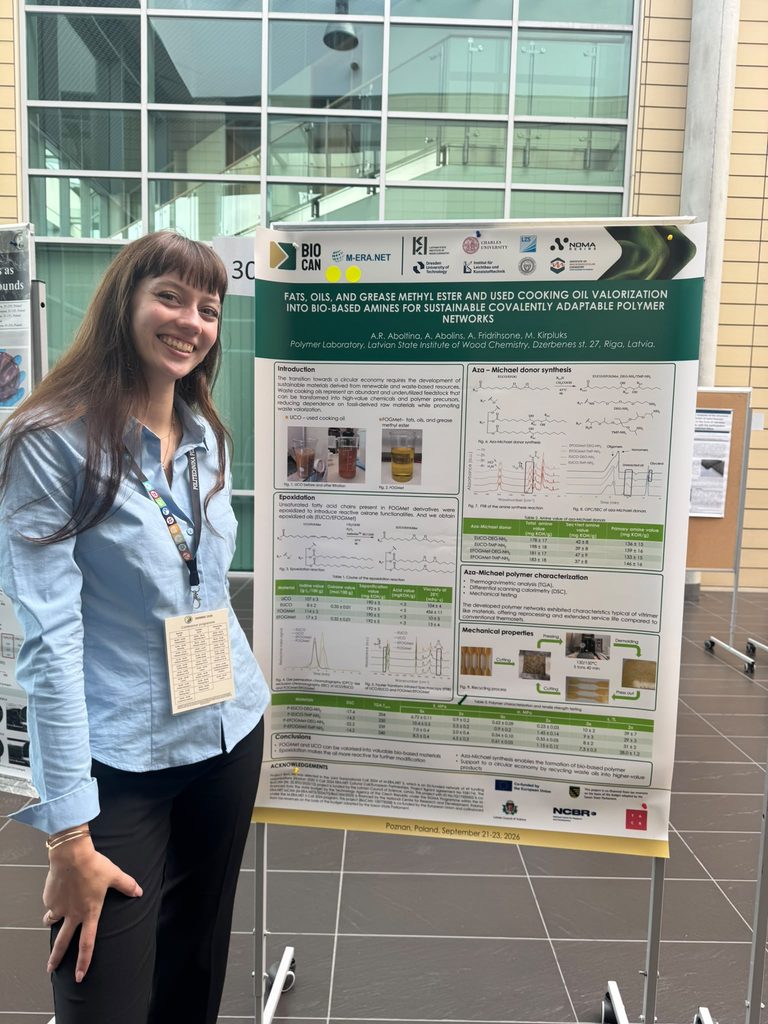
BioCAN team member Anna Rēzija Āboltiņa from the Latvian State Institute of Wood Chemistry presented work on valorizing used fats, oils, and grease, titled “Fats, Oils, and Grease Methyl Ester and Used Cooking Oil Valorization into Bio-Based Amines for Sustainable Covalently Adaptable Polymer Networks,” at Sustainable Waste Management in Materials Science 2026 in Poznań, Poland.
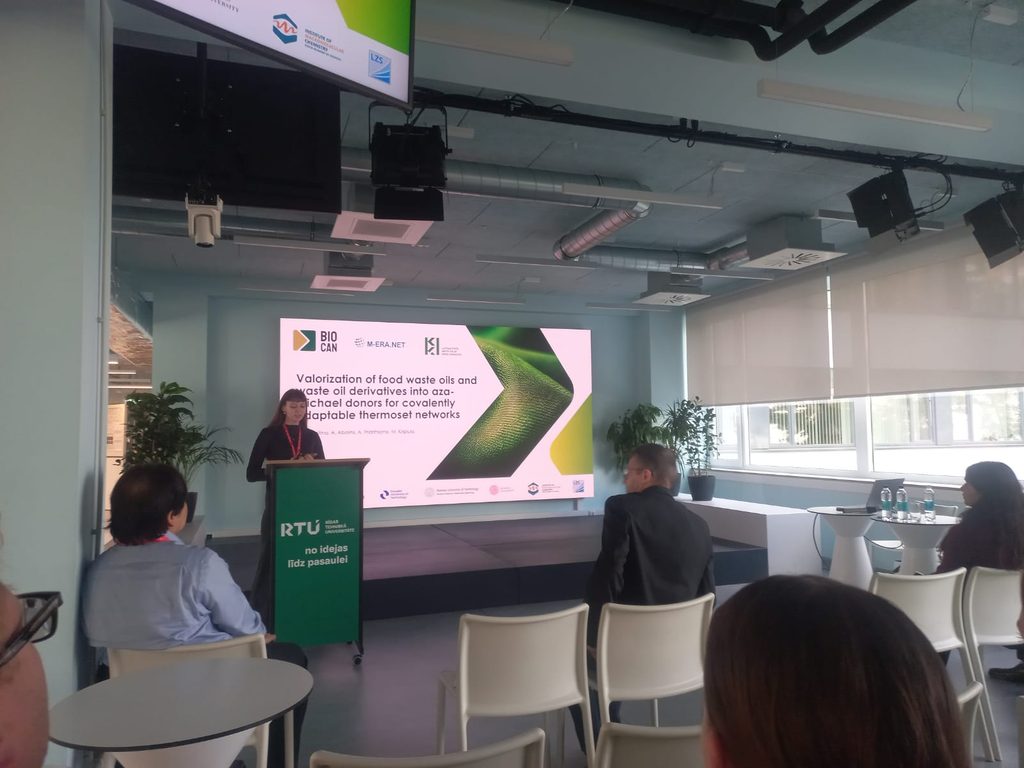
The 24th International Baltic Polymer Symposium (BPS 2026) was hosted by Riga Technical University in Riga, Latvia, from 30 September to 2 October 2026. As part of the BioCAN project (project No. ES RTD/2025/12), Anna Rēzija Āboltiņa presented “Valorization of Food Waste Oils and Waste Oil Derivatives into Aza-Michael Donors for Covalently Adaptable Thermoset Networks”, while Diāna Golubeva presented “Valorization of Methylated Food Waste Oil into Bio-Based Amines as Aza-Michael Donors for Covalently Adaptable Thermoset Networks”. Both contributions were co-authored by Arnis Āboliņš, Anda Fridrihsone and Miķelis Kirpļuks.
The research explores how waste can be transformed into valuable bio-based building blocks for polymer materials. Through epoxidation followed by Aza-Michael donor synthesis, these waste-derived feedstocks were used to develop polymer networks with characteristics typical of vitrimer materials, including reprocessability and extended service life compared with conventional thermosets.
The work demonstrates how waste oils and fats can become a valuable resource for developing more sustainable and circular polymer materials — turning waste into high-value products rather than relying solely on virgin raw materials.